SYSTEMS THINKING FRAMEWORK
DECIPHERING COMPLEXITY
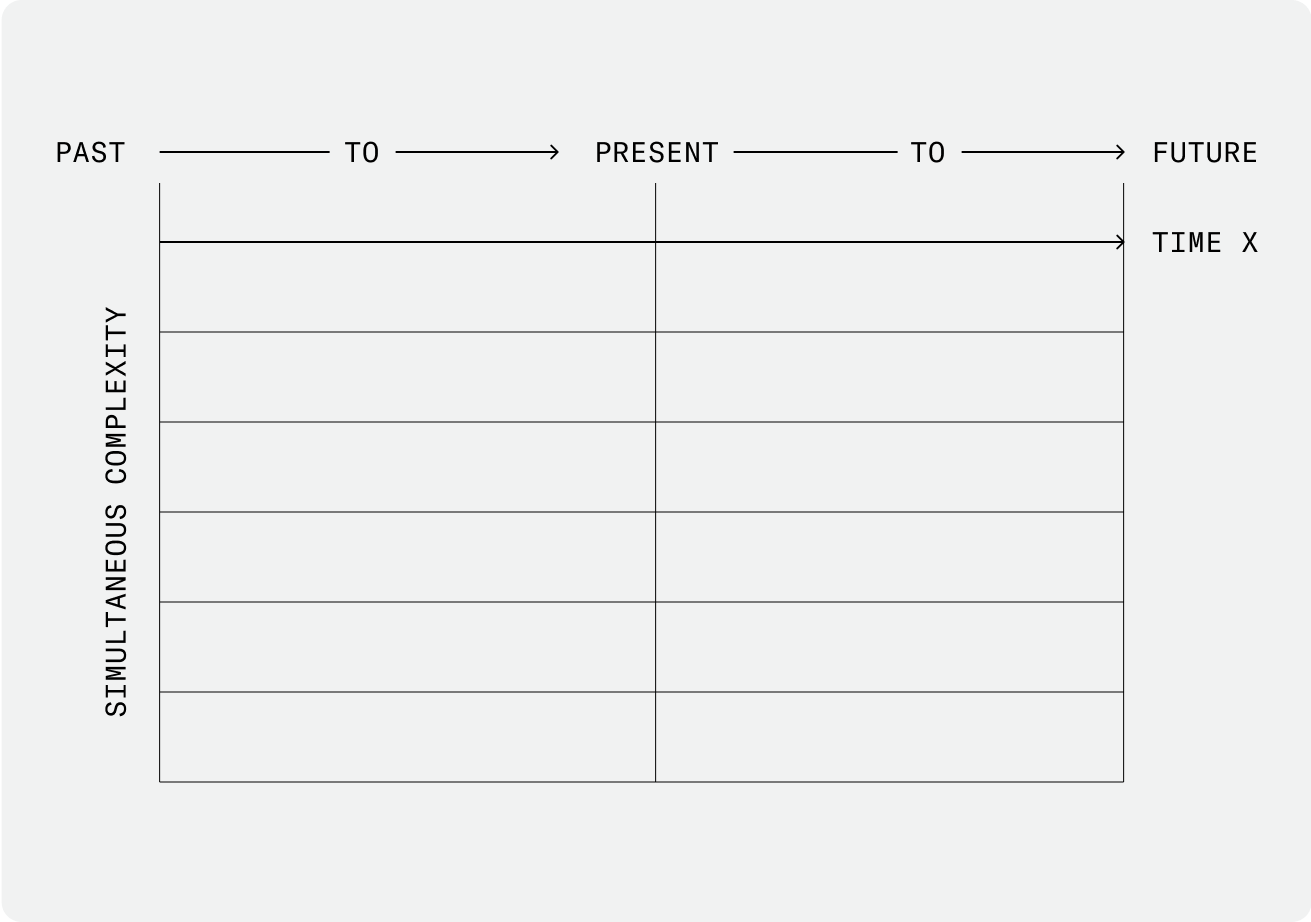
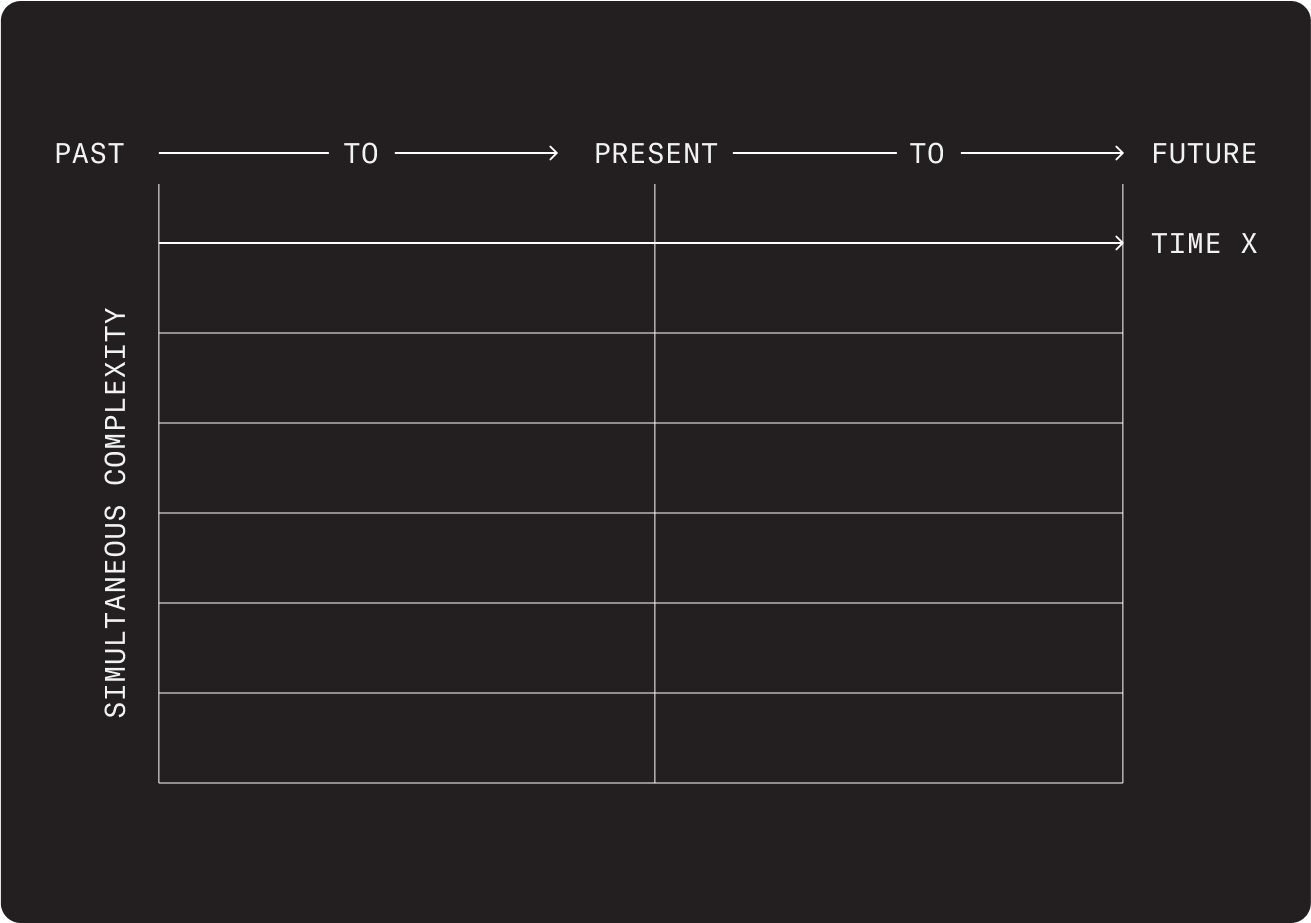
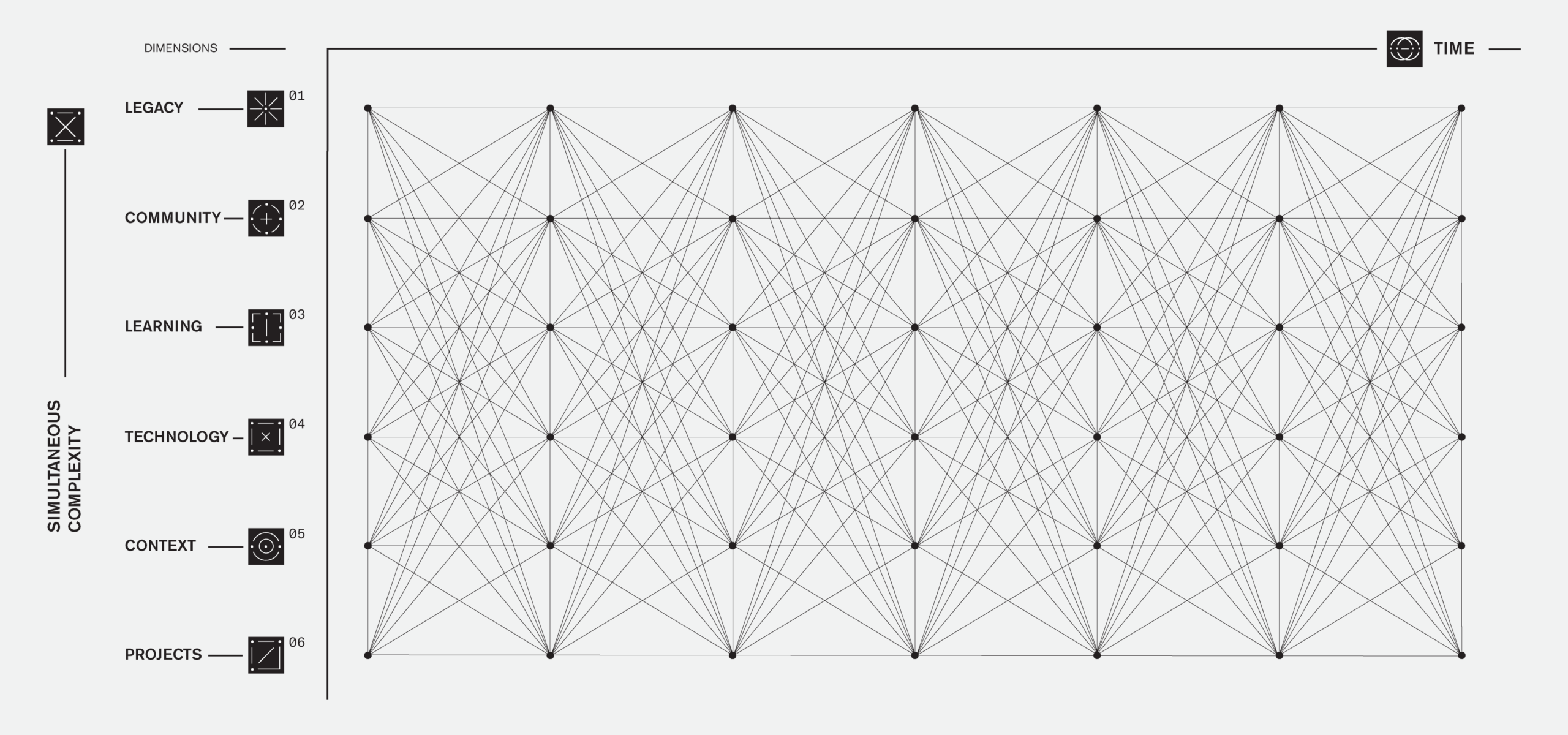
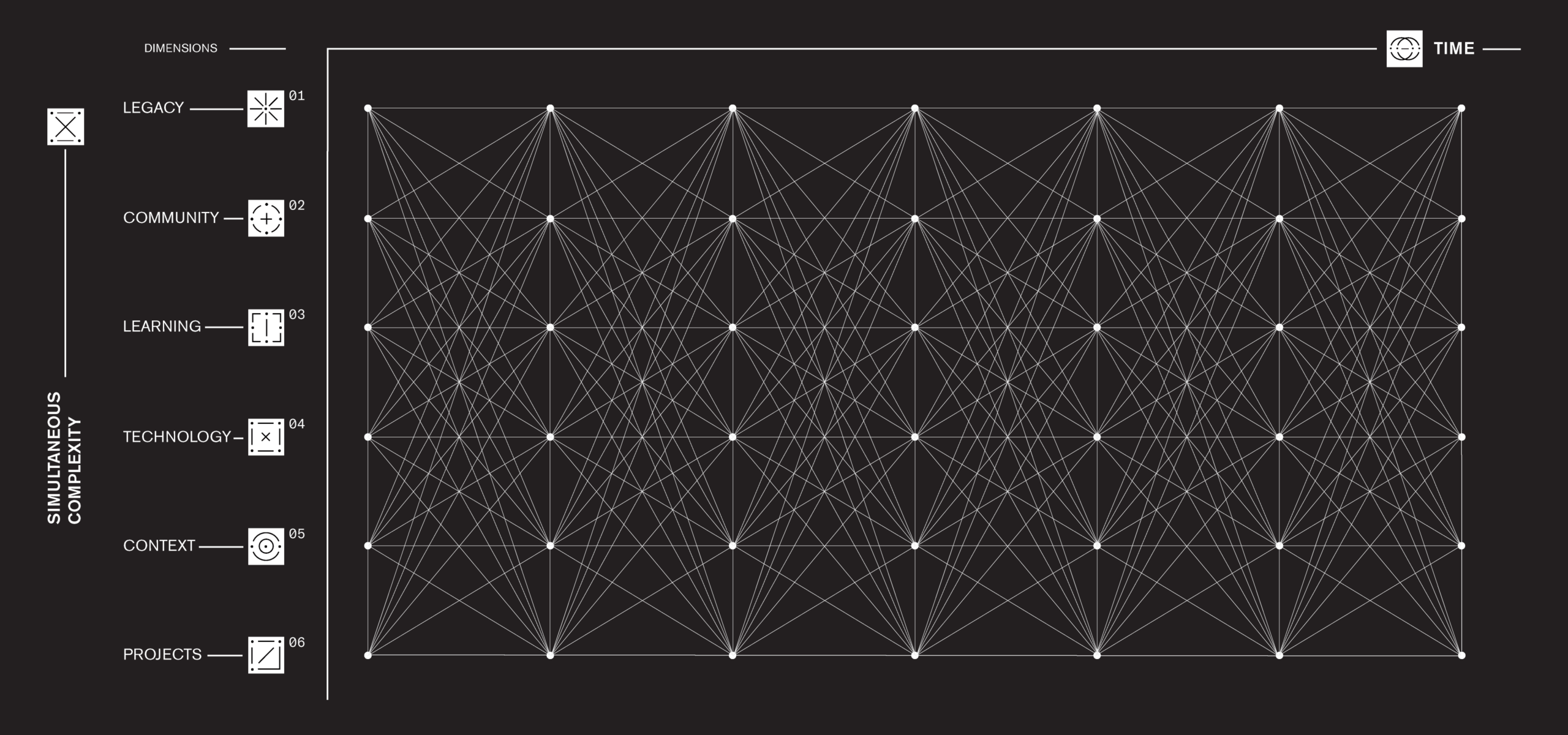
The System Thinking Framework is the central structure of the Horizons Architecture methodology. It provides a multidimensional, people-centered approach for analyzing complex systems and projects, and it supports structured decision-making grounded in the capabilities of individuals and organizations. It is organized across two axes, Simultaneous Complexity and Time X, and six interdependent dimensions: Legacy, Community, Learning, Technology, Context, and Projects.
-


SIMULTANEOUS COMPLEXITY
Coordinates multiple dimensions, agents, and processes in parallel within a single temporal space, so that no dimension is analyzed in isolation.
-


TIME X
Represents a dynamic, non-linear timeline that captures lessons from the past, present actions, and future scenarios. This axis adapts to the changing conditions of the project and interweaves the six dimensions throughout the process, enabling evolutionary and adaptive management.
A PERSPECTIVE THROUGH SIX DIMENSIONS
The Systems Thinking Framework organizes the analysis of a complex endeavor across six interdependent dimensions. Each dimension makes it possible to identify key factors, examine their relationships, and orient decisions on the basis of evidence.
THE SIX DIMENSIONS OF THE FRAMEWORK
-


LEGACY
Defines the purpose and the desired outcome of a complex endeavor across its economic, social, environmental, and personal aspects, so that outcome endures and serves future generations. It is the foundational dimension of the framework. It answers the why and orients every subsequent decision. Progress is measured against the defined legacy.
-


COMMUNITY
Analyzes and maps the network of people, institutions, and AI agents involved in the complex endeavor, and assesses available social capital and collaboration opportunities. It makes it possible to identify key actors and establish the connections needed to advance toward the defined legacy.
-


LEARNING
Identifies the knowledge and competencies the organization needs to acquire or strengthen in order to meet its legacy objectives, and establishes the corresponding learning pathways.
-


TECHNOLOGY
Evaluates and prioritizes technologies, digital and non-digital, relevant to each context, so they serve the legacy objectives and correspond to the organization's actual capabilities.
-


CONTEXT
Gathers and analyzes socioeconomic, environmental, and institutional data from the environment in which the organization operates. This reading shapes strategic decisions and makes it possible to adjust objectives to real conditions.
-


PROJECTS
Translates the analysis from the five preceding dimensions into concrete activities and defines resources, milestones, timelines, and owners. Each project is structured as part of a larger endeavor, aligned with the legacy and the conditions of the context.
A COLLECTIVE PATH WITH CLARITY AND CONNECTION
Horizons Architecture combines the axes of Simultaneous Complexity and Time X with the framework’s six dimensions to structure the journey from a project’s current state to its desired outcome. By synchronizing these elements, the framework clarifies the path for organizations and individuals and strengthens the understanding of critical factors and the formulation of well-grounded strategies.
LET'S WORK TOGETHER ON YOUR NEXT PROJECT
If your organization faces a complex planning or decision-making challenge, contact our team to explore together how to address it.