TAILORED Services APPLICATIONS
Horizons Architecture (HA) works with governments, universities, international organizations, and companies facing high-complexity planning and decision-making challenges. The service model is organized into four lines: strategic consulting, design and implementation of AI systems, operation and maintenance, and licensing. The four can follow one another across a single relationship, from the initial diagnosis to the continuity of the capabilities each project leaves in place.

SERVICE LINES
HA's team applies the methodology across its four service lines. Each project is tailored to the client's challenge and institutional context.
Consulting spans diagnosis, foresight, and planning. It includes complex systems analysis, actor mapping, scenario building, and the formulation of strategies supported by data. Artificial intelligence operates as a tool of analysis throughout the entire process.
HA builds the systems each project requires, among them conversational and specialized AI agents, collective intelligence systems for participation at scale, decision dashboards with traceability, and institutional knowledge bases, integrated with the organization's existing infrastructure.
Deployed systems are operated on an ongoing basis, with technical support, monitoring, source updates, and capability improvements, so that they evolve together with the organization.
After implementation, organizations access the systems and agents through usage licenses. This model preserves the installed capabilities and makes it possible to incorporate new sources and functions without redesigning the system.
IMMERSION WORKSHOPS
Immersion workshops are one of the instruments of the strategic consulting line. In these sessions, in-person or hybrid, participants work with AI-assisted tools to structure diagnoses, identify priorities, and define courses of action collectively. Workshops may include:

OBJECTIVE IDENTIFICATION AND LEGACY DEFINITION
Working with the organization to articulate its long-term objectives and define the legacy, individual and collective, that the project seeks to build. This definition guides the entire process that follows.
COMMUNITY MAPPING AND ANALYSIS
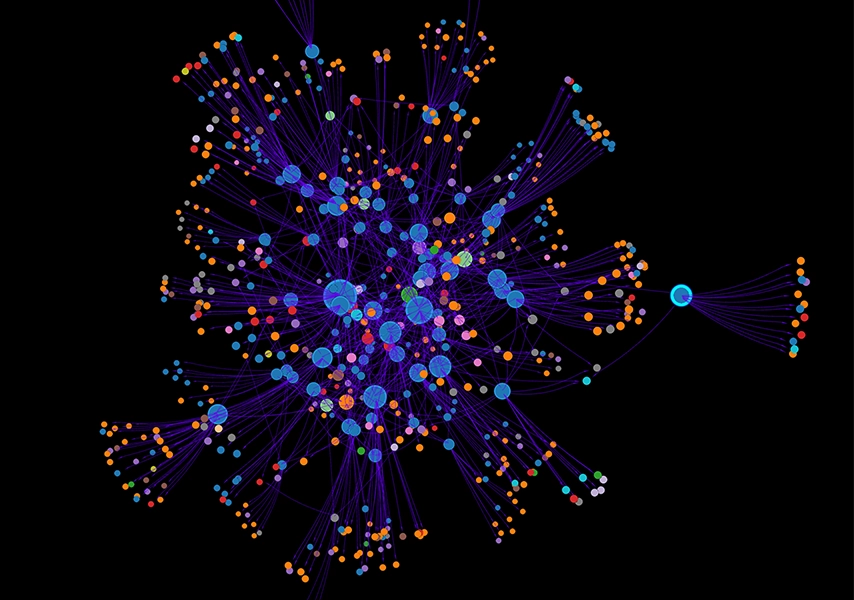
Key actors inside and outside the organization are identified, and the relationships and available social capital are assessed to determine which collaboration networks are relevant to the project.

COMPETENCY DEVELOPMENT AND LEARNING
The capabilities the organization needs to develop in order to meet its legacy objectives are identified, and learning pathways are designed to strengthen those competencies throughout the project.

APPROPRIATE TECHNOLOGY INTEGRATION
Emerging and established technologies relevant to the organization's context and objectives are evaluated, and a plan is defined for integrating them in a way that strengthens the team's capabilities.

CONTEXT ANALYSIS FOR DECISION-MAKING
The socioeconomic, environmental, and institutional factors that shape the organization's challenge are examined, so that strategic decisions are grounded in a rigorous reading of the environment.

STRATEGY DEVELOPMENT AND ACTION PLANS
Drawing on the analysis accumulated in the preceding phases, strategies are formulated with the support of data and predictive models generated by the AI agents, and translated into action plans with defined owners, timelines, and metrics.


SaaS PLATFORM
We introduce our HA platform as Software as a Service (SaaS), providing the HA framework to our community. Currently in an experimental phase, we invite users to explore its features and contribute to its development by joining our waitlist for early access. Your feedback is essential for shaping the evolution of this service.